This summer, United Petrochemical entered its plant�turnaround season, with operations unfolding across multiple sites and tasks arriving in quick succession. Yet there was a group of people who, despite different roles and responsibilities, would not let a single anomaly pass or tolerate the slightest flaw. They were driven by the same conviction: reverence for safety and an unwavering commitment to quality.
Keeping Precision in Mind and in Details
At the maintenance site, the water seal drum of the solvent regeneration unit was being disassembled for gasket replacement as scheduled. Lao Guo, Deputy Director of Refining Workshop I, seized this rare opportunity—when the equipment's internal structure was fully exposed, making it the ideal moment to thoroughly explain the principles and ensure frontline workers fully grasped the configuration. He immediately had team leader Lao Zhang gather members from the sulfur and sulfuric acid teams for an on-site training session around the water seal drum.
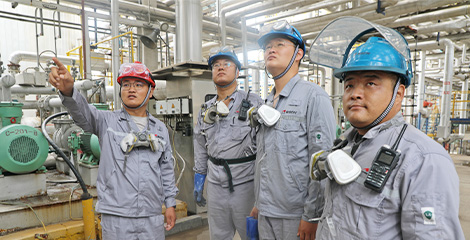
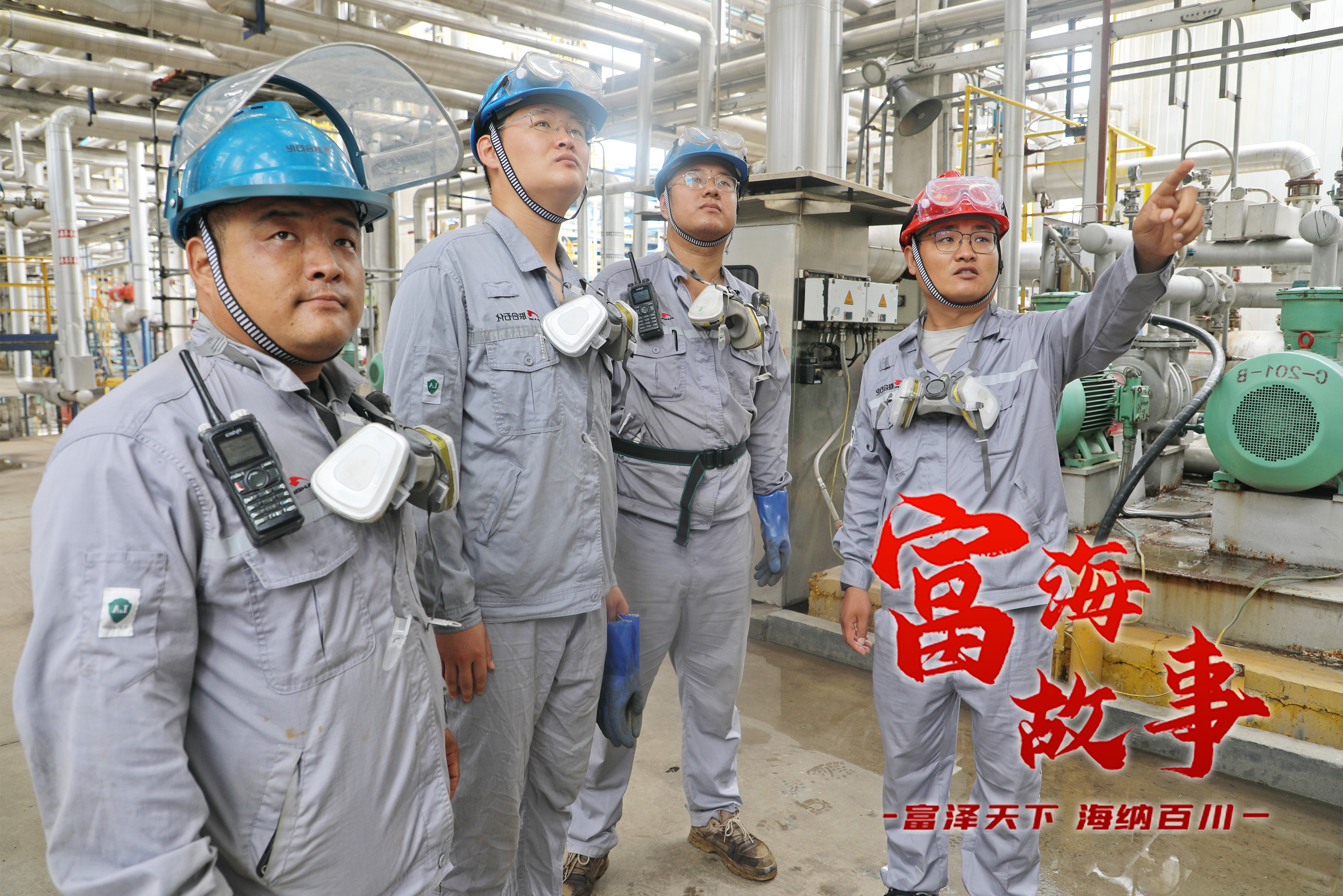
Lao Zhang led his team to gather around the equipment. Using a flashlight, he pointed out internal components while explaining the function of each baffle, the principle of water seal formation, and daily operational precautions. As he reached the bottom baffle of the drum, his flashlight beam suddenly halted. He leaned in for a closer look, his brow furrowing slightly—the baffle's installation position differed from what he recalled of the engineering drawing. Had he misremembered, or was there an equipment issue? He would not let this doubt go unchecked. Lao Zhang immediately suspended the training, retrieved the equipment drawings, and cross�checked every inch against the actual interior. Repeated measurements and omparisons confirmed that the baffle was indeed installed slightly off�spec relative to the design drawing.
▲Lao Zhang's team inspects the water seal drum together
"A misplaced baffle could compromise the entire water seal system." Fully aware of the potential risks, Lao Zhang immediately reported to the workshop and requested a re-verification. The workshop promptly dispatched technical personnel to the site. Working with Lao Zhang and his team, they conducted an inspection that ultimately confirmed his assessment. This hidden hazard would have been difficult to detect during routine inspections. Without Lao Zhang's thorough familiarity with the drawings and meticulous verification, it could have remained undetected for a long time. Following the resolution, United Petrochemical launched a comprehensive quality inspection of equipment installation, conducting a thorough review of all concealed works and internal components. Lao Zhang's rigorous, meticulous, and inquisitive spirit of precision has continuously influenced his colleagues, making "think one step further, check one level deeper" an ingrained practice in field operations.
Entering into the Tower to Safeguard Quality
At the adsorption tower maintenance site, a three-member acceptance team—comprising Xiao Ma and Xiao Wang from Chemical Workshop II and Xiao Zhang from the Equipment Department—extended quality control to the deepest reaches of the equipment.
During quality acceptance, the trio did not stop at visual inspections from outside the tower, nor did they rely solely on verbal reports from the construction crew. "Grids and welds are all concealed inside the tower. Examining only the exterior cannot reveal the true condition. Without personally entering the tower for inspection, we could never feel at ease." With this in mind, after strictly completing the confined space work approval procedures and implementing full safety protection measures, the three team members donned positive-pressure respirators and heart rate monitors, and entered the adsorption tower one by one. The cramped space, insufficient lighting, and extremely low oxygen levels inside the tower tested the endurance and professionalism of the workers. Headlamp beams swept back and forth among the dense components. Welds and seams covered the tower interior. The team adopted a "sectional responsibility, cross-verification" approach, inspecting layer by layer along the internal structure: crouching to measure dimensions, lying prone to feel the welds, tracing weld beads with their fingertips—T-bar welds, continuous ring seams... these inaccessible concealed areas were all examined one by one. The three then consolidated their findings: some T-bars had missed welds, certain sections of the continuous ring had cutting defects that had not been repaired, and the fullness of individual weld beads failed to meet specification requirements.
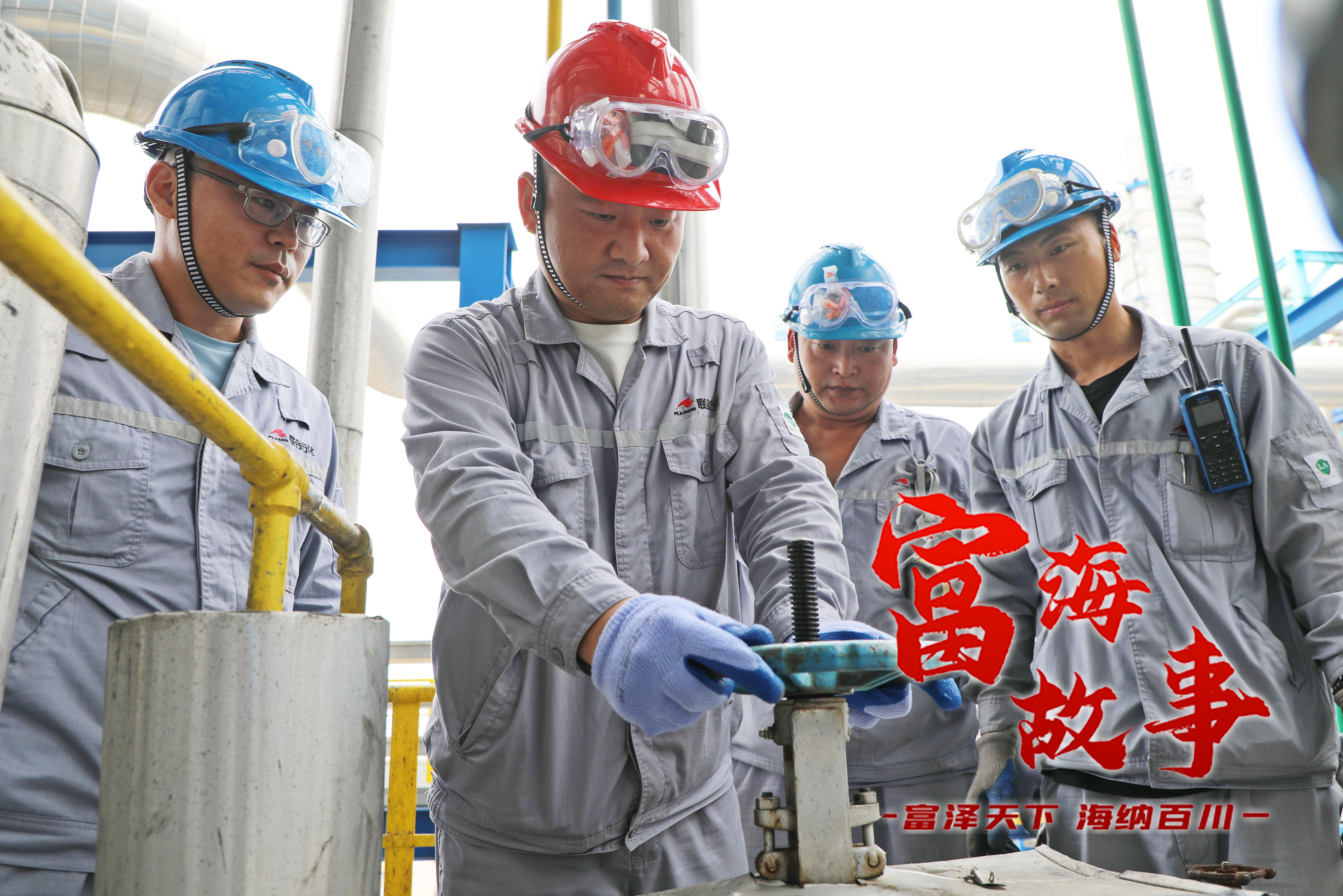
▲Xiao Wang and his colleagues inspect the filter valve of the adsorption tower
Guided by the principle that "quality allows for no compromise or corner-cutting", the team immediately briefed the construction crew on every defect, specifying exact rectification standards and establishing a defect log for closed-loop management. They remained on site throughout the correction process, frequently re-entering the tower to verify repairs against specifications. They only signed off on the acceptance form after all welding points passed dye‑penetrant testing, with zero cracks or porosity detected and full compliance with acceptance specifications.
Whether in plant turnaround, production, or project construction, safety is never guaranteed by chance, and quality confidence is never built on untested assumptions. This relentless pursuit of precision in safety and quality is what Fuhai people practice daily on-site and demonstrate on the front lines.